South Sudan’s healthcare system

The Ministry of Health’s 2025 Essential Health Services Package organises the country’s care into six levels, and names fragmented, paper-bound data as one of its biggest gaps. Tamam is shaped to fit that system, not replace it, and the same six-tier structure runs through most sub-Saharan health systems, so what fits here travels.

EHSP 2025The Ministry's own service package defines the tiers Tamam is built to
Six tiersCommunity through referral hospital, one record across all of them
DHIS2 & IDSRFacility activity rolls up into the national reporting channels already in use

The six levels of care

From the community health worker to the national referral hospital. Tamam covers every tier, so a patient’s record follows them up and down the referral chain.

A community health worker running a malaria rapid test on a small child held by their mother, at a village outreach
Level 01

Community: Boma Health Initiative

Promotion, screening & referral

Served by Registry & referral

The reality Tamam is built for

Essential Health Services Package, 2025

A health system is only as good as what it can remember. South Sudan's runs on paper: a visit is written into a ledger that lives in one building, on one shelf. That single choice (made by circumstance, not by anyone's preference) breaks the record in three places at once.

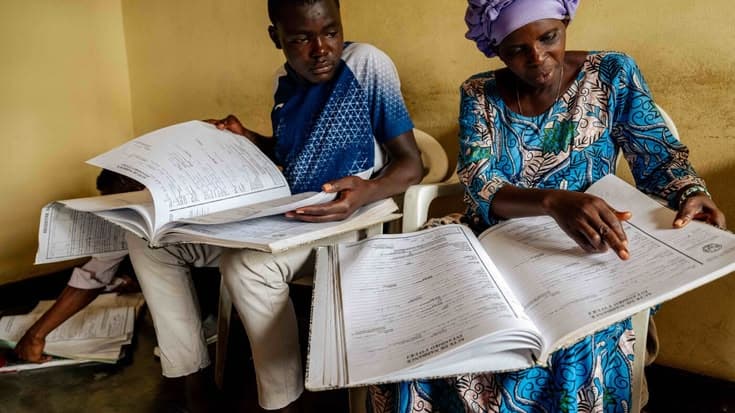
Two health workers reading through wide paper registers, page by page, with more ledgers stacked on the floor behind themAt the bedside
7.6health workers per 10,000 people
the WHO norm is 44.5EHSP 2025

The history is gone

A patient arrives and their past is whatever they can remember out loud. Allergies, the drug that failed last time, the result that came back abnormal: none of it is in the room. So the clinician starts from nothing: tests already done get repeated, treatment already tried gets tried again, and a warning already recorded goes unseen. Where clinicians are this thin on the ground, every repeated test is time the next patient in the queue does not get.

A health worker in a surveillance-and-response vest writing on a paper form at a village outreach table, having just taken a woman's blood pressureAt the supervisor's desk
1.42health facilities per 10,000 people
the national target is 2EHSP 2025

The work is invisible

Community health workers see patients across thousands of scattered villages and decide alone: no second opinion, no one reviewing whether the assessment was right. Their supervisor cannot see which of them are active this week, how many patients they have seen, or which children have missed a vaccine dose, because nothing they write travels any further than the notebook they write it in. At this density, most care happens nowhere near a desk that could review it.

Patients on camp beds under a canvas outbreak-treatment tent, the kind of surge a month-end report announces after the factAt the Ministry
38.7UHC service-coverage index, out of 100
planned each year from returns nobody can checkEHSP 2025

The picture arrives too late

Reports are assembled by hand at month end, copied from ledgers into forms and totalled by whoever is free that day. Numbers arrive incomplete, late, and impossible to check back against the visits that produced them. An outbreak signal, a stock-out, a run of missed immunisations: all of it is visible in the paper, weeks after the moment when acting on it would have mattered.

None of this is a failure of care. It is a failure of tooling.

Software that assumes a server, a live connection or a stable socket was never going to be used here, so the record keeps being written in the one place it cannot travel from. The data exists. It is simply trapped at the point where it is created.

4%of facilities have a computer with internetSARA / EHSP 2025
13%have any on-site power sourceSARA / EHSP 2025
The Ministry’s own diagnosis

The sector still runs on parallel, disconnected systems, and the lack of accurate, timely data means care and planning can’t rely on what’s recorded.

Paraphrased from the South Sudan Essential Health Services Package, 2025: the exact gap a single offline-first record closes.